Have You Gotten A Text About an Outstanding Traffic Ticket Balance or Official Notice FLSHMV? Yep, It’s Another Scam
If you’ve recently received a text claiming you have an “outstanding traffic ticket,” a “final notice,” or something referencing FLSHMV or the Florida DMV, you are not alone. And more importantly, it is almost certainly a scam.
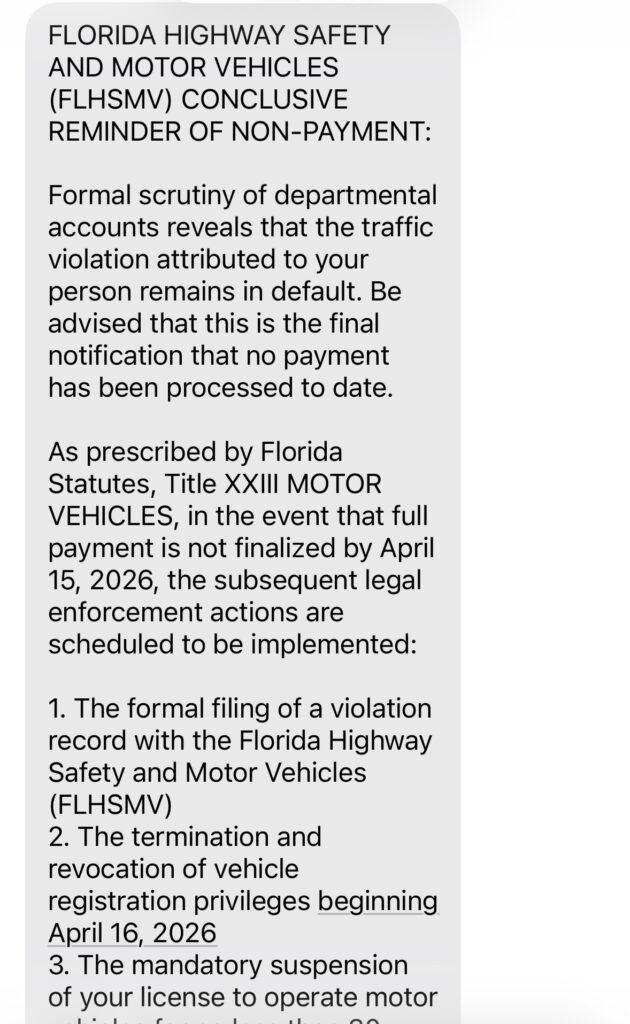
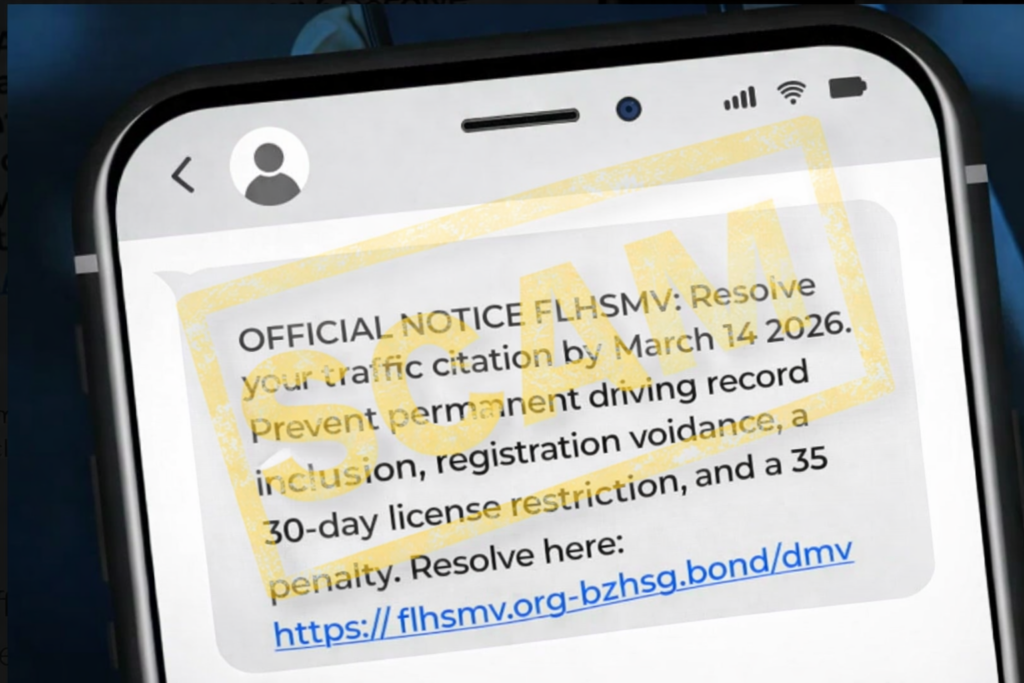
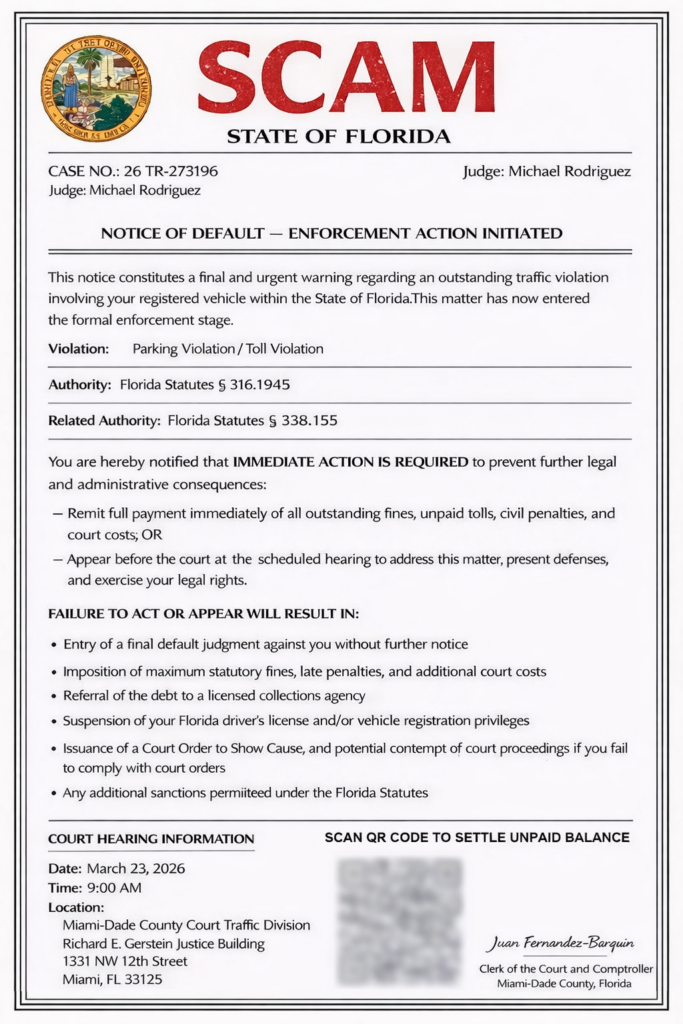
Spiking in March and April 2026 across Florida and especially in South Florida, residents are being targeted by a new wave of highly convincing text message scams. These messages often claim that you owe money for a traffic violation and threaten serious consequences like license suspension, vehicle registration cancellation, or even legal action if you do not pay immediately.
The messages are designed to look official. They may include fake case numbers, made up legal codes, or urgent language like “final notice” to pressure you into acting quickly. Some even include links that appear legitimate at first glance but are actually fraudulent websites built to steal your personal and financial information.
Have You Gotten A Text Referenceing Administrative Code 15c-16.003? Does it Start With “Urgent: Florida DMV Final Notice?” – You Guessed It, Another Scam
Here is the key fact every driver needs to know:
The Florida Department of Highway Safety and Motor Vehicles does NOT send text messages demanding payment or threatening suspension.
That means:
- No real traffic ticket will be collected via text
- No official agency will threaten you with immediate penalties over SMS
- Any link asking for payment in a text message is a major red flag
These scams are spreading quickly because they rely on fear and urgency. Scammers know that most people would rather pay quickly than risk a suspended license. Unfortunately, clicking that link can lead to stolen credit card information, identity theft, or malware on your phone.
How to Protect Yourself
- Do not click any links in unexpected texts
- Do not reply or provide personal information
- Delete the message immediately
- Verify any ticket directly through official court or DMV websites
If you are ever unsure whether a ticket is real, check directly with your local clerk of court or speak with a qualified traffic attorney before taking action.
Jun 2025 Unpaid Toll Scam Text Update
It’s back—again. That scam you thought people were wise to? It’s making another round through Florida, with a fresh coat of digital paint. Back in January, we were one of the first to report about the “unpaid toll text scam.” Flash forward to June 2025, if you’ve received a text claiming to be from the Florida DMV (or “Flοridа Department of Motor Vehіcles”), warning you of license suspension, penalties, or collections—don’t panic. And definitely don’t click.
This new message looks just official enough to catch people off guard. It reads:

“Flοridа Department of Motor Vehіcles (DMV) Final Νotice: Enfоrcement Penalties Begin on Month/Day. Аϲcording to οur records, your trаffic violation remаins unpaid…”
It goes on to threaten that your license will be suspended, your vehicle registration revoked, and that your case will be forwarded to collections—all under the supposed authority of “Florida Code 15C‑16.003.” Then it pushes you to “make immediate payment” at a sketchy-looking web link.
Here’s the truth: It’s fake. Completely. There’s no such code. The Florida DMV—actually called FLHSMV (Florida Highway Safety and Motor Vehicles)—doesn’t send license suspension threats via random text messages.
How To Spot the Scam (Even If You’re in a Hurry)
- The link – That web address? Totally bogus. The actual DMV’s website ends in .gov, not .cc o .com with random letters.
- The law cited – “Florida Code 15C‑16.003” doesn’t exist. It’s made up.
- Tone and urgency – Real government notices don’t use aggressive scare tactics in SMS.
- Typos and strange characters – Weird characters like “ϲ” or “Ν” instead of normal letters are a red flag. Scammers do this to dodge spam filters.
Why You’re Being Targeted
Scammers cast a wide net. You might’ve recently paid a ticket or visited the DMV. Maybe you haven’t. They don’t care. Their goal is to freak you out just enough to make you click that payment link without thinking twice.
And once you do? They’ll either:
- Steal your card or bank details
- Install malware on your phone
- Capture your personal info for identity theft
What You Should Actually Do
- Don’t click anything.
- Don’t reply. Not even “STOP.”
- Report/Block through your phone
- Report it FTC (reportfraud.ftc.gov).
If you’re ever unsure about a legit ticket or fine:
- Visit the official FLHSMV website: https://www.flhsmv.gov
- Or call them directly. Do not trust numbers listed in sketchy messages.
Been Scammed Already? Here’s What To Do Fast
- Call your bank or card company immediately.
- File a report with the FTC.
- Consider placing a fraud alert or credit freeze on your credit file.
- Contact local law enforcement and let them know.
Bottom Line:
That DMV text? It’s not real. But the damage it causes can be. Stay sharp, trust your gut, and don’t click links from unknown sources—especially when they’re dangling legal threats. And if you’re ever in doubt about a real ticket, citation, or license issue, you’ve got a law firm that’s seen it all. We’re here for you.